07 February 2019

impossible shots

I've been shooting stars lately. Handheld, for up to two seconds, with no great effort made to steady myself other than exhaling slowly.

Results are just stupid, as in quite good!

I tried it first with the G85 and Lumix 12-60mm lens. That's a dual-IS arrangement that is purported to give 5 or more stops of stabilization (e.g. a 1-second shot as steady as 1/30s). I'm not crazy enough to pixel peep or seek out errors - I know they are in there - just looking for a reasonable capture. Yes this can be done, up to even 1.6 seconds.

I then grabbed the Oly EP5 with a Pentax Limited 70mm lens. IS in body but not in lens, so much more likely to show shake especially at 140mme (even at f/2.4). Both the Pleiades and Hyades looked quite nice.

Aldebaran and the Hyades with EP5 and Pentax DA70/2.4 Limited. 
Resized and slightly brightened.

I stepped back to the Lumix 14mm f/2.5 and shot a few more with the EP5. Going up to iso3200 really brings out faint stars and colors as well.

I'm impressed! It shows the value of image stabilization even when the feature is abused - and it strongly suggests how nicely images would turn out if I used just a little more effort.

23 January 2019

A chaotic eclipse event.

Skies cleared at an awkward time this past week. I had written off the lunar eclipse until just after it had begun, when I walked outside & looked up.

Oops! It's almost entirely clear out here!

I grabbed the GX1 and zD 70-300 and took a few shots (manual focus only) then decided the YI-M1 and its timelapse function would be easier. Oops the 70-300 won't focus manually at all on the M1(?) so try the sigma 100-300 instead, on my main tripod. By now the moon is almost totally umbra-fied so light is low and that special shade of copper! I then remembered the very small but solid kamay tripod that had never been used: out it came along with the GX1 and zD 70-300 again. Finally I pulled out the K-50 with 28-200 Sigma - and later the 10-20mm for some extra-wide views from Taurus to Leo.

No doubt I have a few keepers. It was a crazy 90 minutes though, and next time I need to do better. It's a classic case of 2MuGS (too much gear syndrome) - and that will definitely change Real Soon.

What hurts more about my frantic imaging episode is that I once was a dedicated star-gazer. If it was dark and reasonably clear I was outside, with camera telescope or binoculars. Eight years later and I don't even know where my sky journal is; I may have swapped computers a time or two since my last entry.

Hopefully that will now change!

22 January 2019

the value of planning

.. is pretty much zero in this household.

That applies to many things, but here I'll stick to cameras.
The G85 has arrived, which should put an end to acquisitions for some time*. The 12-60 covers most of my needs and seals up the camera for foul weather, and the 45-150 takes care of nearly everything else. For now the zD 70-300, a large 4Thirds native lens, can loiter about as the long-range option; since it does transmit data via the adapter unlike my Pentax options, it can tell the G85 how to best stabilize its images without me typing in a random number that pretends to cover any shot from 70 to 300mm. That's handy.

* But wait -
there's more.

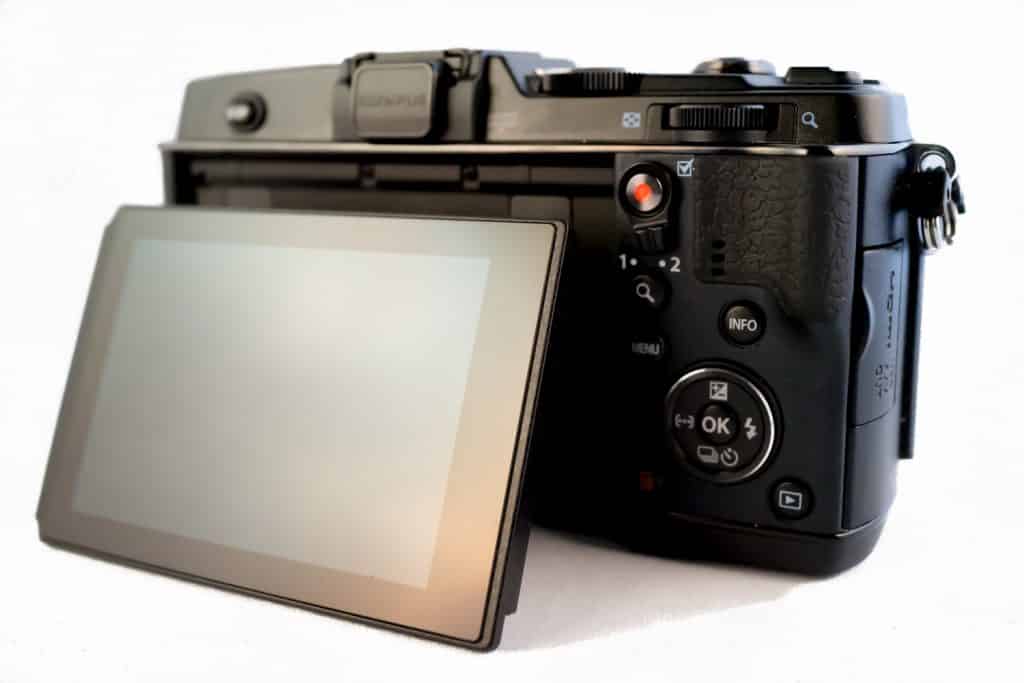
image from review at
https://www.wimarys.com/olympus-pen-e-p5/
The cruel dealers and forum members informed me of a dumpsite deal on the Oly Pen eP5 body. Yes it's pretty old in camera years - but it features the talented Sony 4Thirds sensor, it's tiny, it has a tip screen, and it has Live Time for versatility the Lumix does not offer. It has nearly all the omD-EM5 features except weather seals and an attached viewfinder. Not bad. I've tried nearly every om-D body and found it cramped; I've also tried many PEN bodies and found them less so. The EP5 has dual dials in a sensible pattern unlike the PL versions, so that also will be a positive thing. And I believe I even have a spare battery from my brief EM5 phase!

And if I cannot bear it? 
Off it goes!

Yes the extra expense (and lack of shopping control) hurts - a little. However!
I will soon be offering up the Pentax gear, the YI M1 (and now the GX1) to others. My plan was to grab a 20-25mm m43 lens with that purchase. Well, not so much: it will now pay off the EP5 instead.

10 January 2019

hints at the new kit lineup

So here's what we know about the G85 kit.

Primes: I have the Lumix 14mm and see no reason for it to go anywhere. The DA Limiteds rule at 40 and 70mm, no reason for that to change. I have Pentax 100/2.8, 135/2.5 and 200/4 that can stay - perhaps. We'll see how that works out when sales begin on the Pentax kit.

Zooms: the 12-60 is the mainstay of the system and will serve 90% of my needs. Having looked into the longer range, I only see a rare need for more than the 45-150 that I currently own. The Olympus 70-300 is a nice range match for the 12-60, but its price and slow f/6.7 tele end is not friendly. That's the M.Zuiko which is specific to the micro 4:3 system.

Hmm now - here's a Zuiko Digital for way less; made for the original 4Thirds system, it weighs 600g± but is a half-stop brighter at f/4-5.6 and remains f/5 at 200mm. It also is marked as 'compatible' with CDAF systems, unlike many of the ZD dSLR-era lenses. I'll be giving this one a trial run, as it will only be used for bird and wildlife shots where 600g will not be punishing. I wish it had a tripod ring, hopefully I can cobble up something..

More nice features about the monster tele: 1:2 macro focus and 58mm filters just like the 12-60!

Note: after tests on several µ43 bodies I must conclude the takes of CDAF compatibility are .. well, WRONG.  Manual focus is fine and focal-length data is transmitted to the IS system. No autofocus without phase detection though.

so why a G85?

After several years of buying and selling cameras, mostly via used shops and forum posts, my wonderful wife has told me to order a G85 for our 12th anniversary! This will bundle weather seals, new 4k/8Mpx imaging tricks and several modern updates in to a single system. How strangely.. efficient of me.

So why is the G85 winning out over so many other choices? With so many options, what did this camera do that works "for me"?

  • First off it's a Lumix. I've found myself able to work with them comfortably - not just in hand but in brain. I've tried Olympus PENs and EM5/10/10ii but the feel in hand (just enough cramped) and brain (still recovering from 3fish-1fish Syndrome) have discouraged my trying the EM1 mark1. So Lumix fits me, in fact quite similar to Pentax; sure some features are in common but to explain further won't really clarify anything. Heck they even use the same USB cable, when GX85/9 aren't included.
  • Internal IS + weather seals. My digital Pentax gear had two major features I value: internal stabilization and weather seals. With both I can pretty much shoot anywhere in any light or weather. That's very liberating - especially to someone who for eight years of care-giving has not had been blessed with the best shooting opportunities. In order to have seals and internal-IS in a Lumix body, one must currently choose from GX8, G85 or G90.
  • The new shutter mechanism. This stops the GX8 from topping my list. If the price is about the same go with the substantially improved shutter mechanism, I 'always' say. Well I do now.
  • Lumix 12-60 'kit' zoom. I owned and liked this lens before. Having 24-120mme in a weather-resistant 200g package is really hard to undervalue.
  • G7 echoes. Two years ago I ordered a G7. It was an awful time to try out new gear both financially and mentally, and I sent it back. It fit my hand really well though, and it had some inriguing features. The G85 has all those and more (see last few bullets) - but toss in the super battery-saver option and the optional grip with second battery, and that's even better! While I prefer tip screens to flip types, I'll manage just fine I think. I'll also miss the GX85 in-cam charging.. but I shall manage.
  • Price is still a factor. I could make use of the new features the G9 brings into play, but for $1000 the K-1 reasserts its Why Not Me? argument, and I've presumably said No More to that at last.
So that's how I got here.

To enter the "Why Not Brand xyz" (no that isn't meant as a fuji-X sony-Y nikon-Z acronym - man all the acronyms are copyrighted nowadays) discussion is fruitless. Here's my short and sweet take: Fuji might be perfect for me but I've moved on from physical dials and they now annoy me. Sony's treatment of the true Alpha series still rankles. Nikon and Canon are fine without me, and vice versa. No more - need be said.


09 January 2019

Yes again. New year new gear.

I awoke on the 7th of January with a strong and surprising thought lodged in my head: No More.

No more holding on to two camera systems when I barely use one.
No more using one system to hold the other hostage.
No more reading and greed-ing over the best from Lumix or Pentax. Or FuCaNikSo for that matter (especially them).

No more. Just get a G85+12-60 kit. Grab your sealed camera and lens with stabilized sensor and an X at the end of the name. Let it be Lumix. It's not a G9, not an em1X, not a K-1. So what.

Time to spend no more on lenses for the K mount. Let go.

Well almost. Don't let go of the 40+70 Limited lenses yet. Maybe the 135 or 200 can stay a bit too..

~~~~~~~ ~~~~~~ ~~~~~~
I spent two days fighting it.

The KP made a very good case for being the one true camera. In the end though, only the K-1 would really satisfy my Pentax desires. That's too much for now; no more.

We'll see how many aftershocks come in the next few days.

Oh wait there's more.

No More "reading and greed-ing" means something more: no more spending 45-minute chunks of spare time reading camera fora to learn more about cameras I shall never touch. No more reading threads about techniques I'll never practice, guided photo trips around the world I cannot take, or responding to things I don't really have the qualifications to answer.

No more clutter. Not in my camera bag, my gear closet, my favorites folder, my weary tech-stuffed brain.

Taking photos and making them look their best? More please! Not to post for glory or challenge, just for good friends and family. Maybe a couple per month on a forum or too.
Not often though.

29 December 2018

more M1 testing

Illness and other distractions have allowed limited additional tests of the YI camera. More informal shooting with the 14-42ii OIS lens on the M1 and GX1 has convinced me that Lumix OIS lenses are not supported by the YI camera. A user at DPReview claims to have heard from YI that only lenses with an OIS switch can be used to stabilize M1 images. Sadly that is consistent with my test results. The GX1 view stabilizes with the shutter half pressed with OIS lenses and M1 view does not. It's possible to assemble a good kit with switched lenses - but I'm not about to change what I have for a different kit just to make the M1 more usable. It's therefore up for sale.

This comes without any formal work on raw images to test the value of the 20Mpix sensor. Images from the M1 do not radiate great vibes any more than other cameras' images that I have used, so I feel no hurry to check the deep detail.

Overall I like a lot of the M1 features. It's a decent camera with many cool features. I don't need another decent camera, however: I feel that the K∙50 and GX1 are comfortably in that category already. Given the extent of my K-mount lens the µ43 gear can remain as-is; the GX1 is plenty good enough for all video work and plenty of nice stills with the 14, 14-42ii and 45-150. Since anything I feel like adapting from the Pentax side will work too, I feel that I'm sitting pretty!

postscript ~ maybe, just maybe?
Given no interest in the M1 thus far, praps I will seek a 14-45mm to go with it. Or a 14-140?

08 December 2018

A week with the M1

I've given a limited amount of time to the YI M1 camera and its 12-40mm kit lens; hopefully some more time will come soon. What have I learned thus far?

To start with - I was not expecting the M1 to be amazing. It has a few very nice features for my use, a few adequate features and not much that I'd miss a lot. Given that I don't expect it to beat the recently-departed GX85 it's really competing with the GX1 as my small-body option - and it's quite competitive there for size/bulk and overall competence, plus it has the 4k and 20Mpx bonus features.

What I expected to like -
  • the 20Mpixel sensor (not enough testing to determine)
  • the USB charging capability (yep, that's nice)
  • the straightforward touchscreen interface (still learning but it's decent enough)
  • video potential (including 4k, FHD and a native 4:3 "2k" mode)
  • time-lapse and panorama capability
  • Wifi and Bluetooth connections
What I presumed in advance I'd find challenging -
  • the fixed viewing screen (I'm a big fan of tip screens, less so of flips)
  • the limited ability to change NR or image-style parameters (saturation, contract &c)
  • the lack of a viewfinder option (not a big deal, yet)
  • lack of internal stabilization or with the 12-40mm native lens PLUS lack of clarity on Lumix OIS compatibility
  • no DFD, 'starlight AF' and other focus magic that Oly/Lumix have worked on
And the major wild-card: 
  • what will YI improve with the next firmware update? 
This has been a major point to ponder. The initial M1 impressions were universally that of an unfinished camera with one whistle and a bell with no clapper. Now with firmware 3.1 we have raw+jpeg, timelapse recording to stills or video, improved AF performance and many other common features that the M1 originally lacked.

= = = = = = = = = = = = = = = = = = = = = = = = = = = = = = = = 

So here are the major points worth making, one week in (more or less)

At first grasp I liked the grip. It's the sort that allows the camera to hang from the finger-tips with ease, not a simple bulge but an actual ledge. That was a good start.

I took a few images that looked bad, exposure was way off. Once I found the EV control I shifted it off from the +4.7 setting and things improved greatly.

The style section is simple: vivid, less so, gentle and strong monochrome and a lesson section for using pre-set poses for types of images. Each is locked down with its 'look' so no Lumix- or Pentax-like adjustments for hi/lo key, saturation/contrast or noise adjustments. (Maybe Firmware 4?)

I tried a limited amount of video, including one at 4:3 2k setting. Looked OK on the little screen and touch-AF worked fine. I need to bring them into the computer for more evaluation.

The Xiaoyi 12-40mm f/3.5-5.6 is an unusual µ43 lens in my kit. 
  • It uses 49mm filters not the semi-standard 46mm, and zooms Olympus/Canon direction not Lumix/Pentax/Nikon ..so it's an outlier for me. 
  • Retractable design, but unlike the 12-32 it's still pretty bulky when retracted.
  • Shots at 12mm are not corrected much if at all for distortion when compared to the 14-42ii Lumix. I didn't get a chance to try the 12-32 but will do so. Personally I prefer no such corrections - I want to control them at my discretion with software of my choosing! 
  • AF speed was similar between the two kit lenses, but the Lumix focuses slightly closer for tighter close-ups (perhaps the 2mm extra telephoto is the only enlargement difference and min. focus is the same?). 
  • Flare check indoors showed a bit more 'glow' on bright lights than the Lumix, which is disappointing but not surprising.
Big question: is OIS enabled with Lumix lenses?
Answer.. still unclear. In quick tests around 1/4 second I would say the Lumix lens was not stabilized - in fact I got more keepers with the XiaoYi lens for no good reason whatsoever.


Interface feedback. This is intensely personal and reading my thoughts will provide only limited assistance - yet, here goes!

The interface is simple: one control wheel, power switch that rotates around the shutter button and a mode dial (video button sits in the middle), and a hotshoe with no fancy extra contacts. The mode dial has P/A/S/M, full-auto, panorama, plus .. [S] and C (yes I needed the image below to decipher those!). On the back: two more buttons - and the vital touch screen. Battery goes in the bottom, SD card to the right side by the USB-micro and micro-HDMI ports. The tripod socket is not aligned with the optical axis.

from YI website - [S] is Scene, C is 'master guide'

On the screen, a swipe left will bring up the basic settings; scroll down for two more sets of options. From live view a swipe right enters the scene-setup mode with hints on posing people for more dynamic portrait shots. In playback swiping left-right changes images, zoom in for more detail or zoom back once for EXIF/exposure readout.

The live-view screen has soft buttons on the left for aperture, shutter and EV which will be active or vary automatically depending on the mode you've selected. In PASM modes a soft button on the right brings up a simple control panel for adjusting ISO, white balance, drive mode, metering, AF mode and file type. Simple enough.

AF speed is pretty good, though at lower light levels it clearly struggles - no EV-4 'starlight AF' here. Touch screen to AF works well, and a setting change allows focus+expose. Focus peaking is available with manual focus, but others have noted the depth of peaking is more than with most other cameras. It's worked well enough when looking on the screen, but perhaps with the computer more focus errors will be visible.


= = = = = = = = = = = = = = = = = = = = = = = = = = = = = = = = 

Specs-list highlights

Battery life is a pinch higher than most µ43 - probably helps CIPA that it has no internal flash!
Operating range goes to -10°C, that's nice!
JPEG best setting is 1:2.7 compression, low enough for some post-processing without major deterioration.